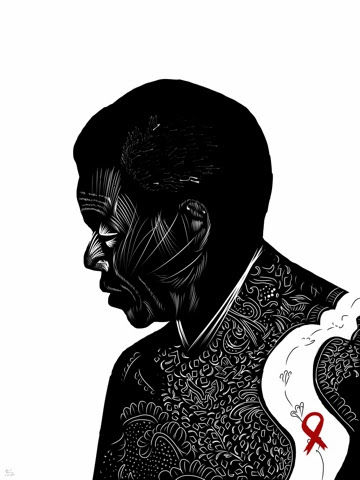

Friday, December 6, 2013


Wednesday, June 12, 2013
iPad speed-painting on this, the day of your daughter's wedding
While watching "The Godfather" tonight, and enjoying its rich, dark, shadowy cinematography, I ran through a couple of quick iPad paintings using Procreate. It was interesting seeing just how much of the frame was filled with pure black, and how the rest of the color scheme mainly consisted of red and gold.


Saturday, May 4, 2013

Thursday, April 25, 2013
Supergirl!
The result of this evening’s iPad Mini sketching — Supergirl! Superman’s fellow Kyptonian buddy.
I modeled her on Mahmud Asrar’s design for DC’s “The New 52” version of the character.

I modeled her on Mahmud Asrar’s design for DC’s “The New 52” version of the character.
Wednesday, April 24, 2013
Captain America, robo-dinosaur champion.
Sort of a request painting here, a friend of mine described something as "almost as cool as Captain America riding a cyborg T-Rex through the battlefield", so here it is.
Considering superheroes and dinosaurs are two of the most fun things in the universe to draw, I really ought to draw them more than I currently do...

Considering superheroes and dinosaurs are two of the most fun things in the universe to draw, I really ought to draw them more than I currently do...
Monday, April 8, 2013
Boston Red Sox Opening Day
Just a quickie little iPad mini sketch for Baseball’s opening day at Fenway Park.
Perhaps a little more ominous than it ought to be, and it was tough to work out the batter’s pose.
Pretty messy, but hopefully amusing.

Perhaps a little more ominous than it ought to be, and it was tough to work out the batter’s pose.
Pretty messy, but hopefully amusing.
A "Land of Winter" Triptych
Just a little triptych of pre-production images for my personal project: "Land of Winter". Composing images in black & white is a lot of fun, it's satisfying to wring a sense of drama from a composition using tone.


Sunday, April 7, 2013
The Man of Steel & The Dark Knight
And now some superhero drawings, first tackling the most iconic of all — the Man of Steel, Superman. I tried to go for a slightly more flat and graphic look than I usually do.
Of all the superheroes, Superman is throne that perhaps works best as a cultural icon than a character, functioning for us the way that Achilles functioned for ancient Greeks. He represents what is essentially the purest form of virtue: when given unlimited power, would one still strive to be a moral person? It’s a philosophical issue that goes all the way back to Plato, describing the Ring of Gyges (a ring that turns the wearer invisible, perhaps an influence on Tolkien). Superman is how most of us WISH we would act if given limitless power.
As a character, and perhaps I just haven’t read enough of his stories, he doesn’t have many personality flaws, and his weakness, Kryptonite, is so singular that the only tension he can have is how someone will sneak a bit of Kryptonite into Clark Kent’s morning coffee. I'd think that this would make him rather dramatically inert, but the character has been with us for so many decades that I think it's more a case where his character serves the same narrative function as the lead character to "The Shawshank Redemltion" or "Forrest Gump", wherein the protagonists themselves don't change, but the effects f their presence or actions changes those arid them.
The second image is a quicker sketch of Batman, the dark flip side of Superman's cultural function (Superman is gifted with supernatural powers, Batman is merely wealthy and disciplined, Superman is motivated by high-minded ideals, while Batman is motivated by vengeance and a loathing for criminals). I don't think the Batman sketch is terribly successful, but it was fun enough that I'm going to try another crack at the character...


Of all the superheroes, Superman is throne that perhaps works best as a cultural icon than a character, functioning for us the way that Achilles functioned for ancient Greeks. He represents what is essentially the purest form of virtue: when given unlimited power, would one still strive to be a moral person? It’s a philosophical issue that goes all the way back to Plato, describing the Ring of Gyges (a ring that turns the wearer invisible, perhaps an influence on Tolkien). Superman is how most of us WISH we would act if given limitless power.
As a character, and perhaps I just haven’t read enough of his stories, he doesn’t have many personality flaws, and his weakness, Kryptonite, is so singular that the only tension he can have is how someone will sneak a bit of Kryptonite into Clark Kent’s morning coffee. I'd think that this would make him rather dramatically inert, but the character has been with us for so many decades that I think it's more a case where his character serves the same narrative function as the lead character to "The Shawshank Redemltion" or "Forrest Gump", wherein the protagonists themselves don't change, but the effects f their presence or actions changes those arid them.
The second image is a quicker sketch of Batman, the dark flip side of Superman's cultural function (Superman is gifted with supernatural powers, Batman is merely wealthy and disciplined, Superman is motivated by high-minded ideals, while Batman is motivated by vengeance and a loathing for criminals). I don't think the Batman sketch is terribly successful, but it was fun enough that I'm going to try another crack at the character...
Thursday, April 4, 2013
Painting with the iPad mini
Here's my first scribbling using Procreate on an iPad mini with a Wacom Bamboo stylus, drawn in Fixx Coffeehouse on Dawson St. in Dublin.

Wednesday, April 3, 2013
Kovet Cases! (and Rugby!)
So the updates have been quiet these days, but my illustration efforts have kicked off again, and now I can start posting and talking about it!
Last Christmas, wandering in and out of shops in Dublin doing some last-minute shopping, I strolled into The Little Museum of Dublin on St. Stephen's Green, who had an Irish Design holiday shop on their first floor. My attention was drawn to a display of Kovet iPhone cases, reassuringly thick and sturdy, and featuring exceptional designs and paintings on the back. After a bit of nosing around (and after buying two cases), I checked them out. They're based in Ireland, manufactured in Sligo, and feature artists and designers based in Ireland. I'll admit the quality of the work they displayed was intimidatingly good, but on a long shot I sent them my portfolio. After the holidays, I got a reply asking for illustrations to adorn phone cases.
Success!
So far, only one of my designs is on sale, and that's the one I'm going to discuss (there are four more, and to preserve some of the surprise when they're released, I'll post about them as they become available)
As I was beginning this set of paintings, the Six Nations rugby tournament was just getting underway. It would ultimately turn out to be one of the most disastrous tournament campaigns the Irish Rugby Team has ever suffered, but it was buoyed by an initial first week victory over eventual champions Wales. I decided to give a rugby-themed case a try.
90% of the work for this image was accomplished using an iPad Mini, an app called Procreate, and a Wacom Bamboo iPad stylus. This way of working is absolutely thrilling. Never having used a Cintiq tablet, the immediacy of drawing right on the screen was exhilarating. Procreate's flexible tools and brushes, along with the ease of having access to layers, means that a rough color draft of your image can be ready in a minute, leaving the rest to fine-tuning.
I liked the original line drawing for the rugby player, despite it's straight line of action, so I preserved that as the rest of the drawing was fleshed out. The background is Lansdowne Road Stadium (more corporately known as the Aviva Stadium), a new and glassy arena in which the Irish national team play. As the image neared completion, the background started to make the overall composition a little too busy, with too many elements competing against the player for attention. I added the white halo of light behind him last, emphasizing his silhouette without losing the essence of the background (professional athletes might already feel they emit this messianic glow, so it's perhaps fitting.)
I was very late in developing an enthusiasm for sport. I wasn't able to participate in contact sports whatsoever, so growing up, sport was just something that other people did. I didn't have the physical experiences on the field that would allow me to appreciate the physical achievements of athleticism. My eventual appreciation came when I was well into my studies in Animation. Focusing my mind so much on seeking out beauty through motion led to an awe of athletes' control, fluidity, and power. The aesthetic qualities of sport are hard to deny. Anyone who appreciates action cinema has so much to enjoy in seeing the clash of muscle and the finesse of tactics.
And lest this first point seem a little bit too worshipful of a rather martial sort of beauty, the second thing that draws me to sport is the bloodless and often positive way it channels humanity's baser instincts of tribalism. Not everyone agrees with this view. In 1945, George Orwell lamented:
He then goes on to describe sport as "warfare, minus the shooting". Those last three words are very, very important. While there are certainly examples in which he's very correct (see, for example, any sporting clash between Croatia and Serbia), in my personal experience of watching and attending international sporting matches, quite the opposite effect occurs. During the period of play, one cheers and encourages one's own team, but that support is more spirited when there is a respect and acknowledgement of the ability of the opponents. Orwell is right when he says that most sports are a binary win/lose result, but he concludes that a supporter wishes to see the opposition humiliated.
I think the real desires of a sporting audience are more clearly reflected by David Mamet's drama-based assessment of what makes a "perfect" sporting match. Great story artist Mark Kennedy paraphrases the essence of what a sporting audience wants to see:
Anecdotally, any time I have been to an international match (or a match with visiting foreign fans), there has always been a wonderful sense of welcoming the visiting supporters here in Dublin in a spirit of affection and fraternity. Even a match-up that observers might predict to be aggressive or fiery, such as Ireland vs England, after the 80 minutes of play is finished, the Ireland supporters and England supporters all flow out into the same streets, the same pubs, the same restaurants, and most everyone involved is the richer for having shared their city and time with the visitors. And a tradition such as the British & Irish Lions rugby tour every four years is especially wonderful, when four nations assemble a single team that the entire public can get behind. Yes, there is still inherently an "us versus them" element if they play AGAINST any team, but being able to have something of a super-national team has to be seen as a unifying force. Trust me, there will be more on the British & Irish Lions to come on this blog, perhaps another iPhone case, hmm?
Sorry about going all long-winded, I wound up having to work harder than I'd thought I would to justify my appreciation for sports. Anyway, there are more iPhone case designs coming up, but also more doodles to post in the coming days thanks to this iPad. Sorry to inflict so much reading on you, especially when I have a blog devoted just to long-winded nonsense like this, but if you've read this far, thank you very much! I'll be back with more illustrations soon!
Last Christmas, wandering in and out of shops in Dublin doing some last-minute shopping, I strolled into The Little Museum of Dublin on St. Stephen's Green, who had an Irish Design holiday shop on their first floor. My attention was drawn to a display of Kovet iPhone cases, reassuringly thick and sturdy, and featuring exceptional designs and paintings on the back. After a bit of nosing around (and after buying two cases), I checked them out. They're based in Ireland, manufactured in Sligo, and feature artists and designers based in Ireland. I'll admit the quality of the work they displayed was intimidatingly good, but on a long shot I sent them my portfolio. After the holidays, I got a reply asking for illustrations to adorn phone cases.
 |
| Kovet |
Success!
So far, only one of my designs is on sale, and that's the one I'm going to discuss (there are four more, and to preserve some of the surprise when they're released, I'll post about them as they become available)
 |
| "Line Break" (Click the image for full size. Click the link to see the case.) |
As I was beginning this set of paintings, the Six Nations rugby tournament was just getting underway. It would ultimately turn out to be one of the most disastrous tournament campaigns the Irish Rugby Team has ever suffered, but it was buoyed by an initial first week victory over eventual champions Wales. I decided to give a rugby-themed case a try.
90% of the work for this image was accomplished using an iPad Mini, an app called Procreate, and a Wacom Bamboo iPad stylus. This way of working is absolutely thrilling. Never having used a Cintiq tablet, the immediacy of drawing right on the screen was exhilarating. Procreate's flexible tools and brushes, along with the ease of having access to layers, means that a rough color draft of your image can be ready in a minute, leaving the rest to fine-tuning.
I liked the original line drawing for the rugby player, despite it's straight line of action, so I preserved that as the rest of the drawing was fleshed out. The background is Lansdowne Road Stadium (more corporately known as the Aviva Stadium), a new and glassy arena in which the Irish national team play. As the image neared completion, the background started to make the overall composition a little too busy, with too many elements competing against the player for attention. I added the white halo of light behind him last, emphasizing his silhouette without losing the essence of the background (professional athletes might already feel they emit this messianic glow, so it's perhaps fitting.)
 |
| "Line Break" iPhone case |
I was very late in developing an enthusiasm for sport. I wasn't able to participate in contact sports whatsoever, so growing up, sport was just something that other people did. I didn't have the physical experiences on the field that would allow me to appreciate the physical achievements of athleticism. My eventual appreciation came when I was well into my studies in Animation. Focusing my mind so much on seeking out beauty through motion led to an awe of athletes' control, fluidity, and power. The aesthetic qualities of sport are hard to deny. Anyone who appreciates action cinema has so much to enjoy in seeing the clash of muscle and the finesse of tactics.
And lest this first point seem a little bit too worshipful of a rather martial sort of beauty, the second thing that draws me to sport is the bloodless and often positive way it channels humanity's baser instincts of tribalism. Not everyone agrees with this view. In 1945, George Orwell lamented:
I am always amazed when I hear people saying that sport creates goodwill between the nations, and that if only the common peoples of the world could meet one another at football or cricket, they would have no inclination to meet on the battlefield. Even if one didn't know from concrete examples (the 1936 Olympic Games, for instance) that international sporting contests lead to orgies of hatred, one could deduce it from general principles.
He then goes on to describe sport as "warfare, minus the shooting". Those last three words are very, very important. While there are certainly examples in which he's very correct (see, for example, any sporting clash between Croatia and Serbia), in my personal experience of watching and attending international sporting matches, quite the opposite effect occurs. During the period of play, one cheers and encourages one's own team, but that support is more spirited when there is a respect and acknowledgement of the ability of the opponents. Orwell is right when he says that most sports are a binary win/lose result, but he concludes that a supporter wishes to see the opposition humiliated.
I think the real desires of a sporting audience are more clearly reflected by David Mamet's drama-based assessment of what makes a "perfect" sporting match. Great story artist Mark Kennedy paraphrases the essence of what a sporting audience wants to see:
Even if my team is winning in a lopsided game I start wishing the other team would surge back just to keep it interesting. Especially if you're there in person. When you're watching from home you can turn off the TV if the game stinks. But if you're sitting in the stadium in an expensive seat you always wish you got a good show for your money, and a good show means great drama.Spectators don't wish to see the opposition humiliated because they want to see a real contest.
Anecdotally, any time I have been to an international match (or a match with visiting foreign fans), there has always been a wonderful sense of welcoming the visiting supporters here in Dublin in a spirit of affection and fraternity. Even a match-up that observers might predict to be aggressive or fiery, such as Ireland vs England, after the 80 minutes of play is finished, the Ireland supporters and England supporters all flow out into the same streets, the same pubs, the same restaurants, and most everyone involved is the richer for having shared their city and time with the visitors. And a tradition such as the British & Irish Lions rugby tour every four years is especially wonderful, when four nations assemble a single team that the entire public can get behind. Yes, there is still inherently an "us versus them" element if they play AGAINST any team, but being able to have something of a super-national team has to be seen as a unifying force. Trust me, there will be more on the British & Irish Lions to come on this blog, perhaps another iPhone case, hmm?
***
Sorry about going all long-winded, I wound up having to work harder than I'd thought I would to justify my appreciation for sports. Anyway, there are more iPhone case designs coming up, but also more doodles to post in the coming days thanks to this iPad. Sorry to inflict so much reading on you, especially when I have a blog devoted just to long-winded nonsense like this, but if you've read this far, thank you very much! I'll be back with more illustrations soon!
Subscribe to:
Posts (Atom)